Yes, always. Council approval for a relocatable house is always needed, because every relocatable house in Queensland needs a Building Approval before it is positioned. There are no exceptions based on the size, age or style of the house.
Get a free quote → or call 07 3888 9399.
Planning a demolition instead? See our house demolition cost guide.
A Building Approval is the formal certification confirming that a building, including a relocated house, meets the applicable building standards for its new site. It’s issued by a private certifier and is a separate process from any planning or development approval your council might also require depending on your property and local planning scheme.
Getting a Building Approval isn’t a one-person job. Three parties are typically involved:
Project BA (private certifier). Assesses the application against the relevant building standards and issues the Building Approval. This is generally the central point of the whole process.
Engineer. Provides the structural engineering reports required to demonstrate the house and its new footings/foundations meet structural requirements for the site.
Architect. Prepares the architectural drawings that document the house and the proposed siting, used as part of the application.
Council also plays a role, through the council application itself and, in many cases, a council bond.
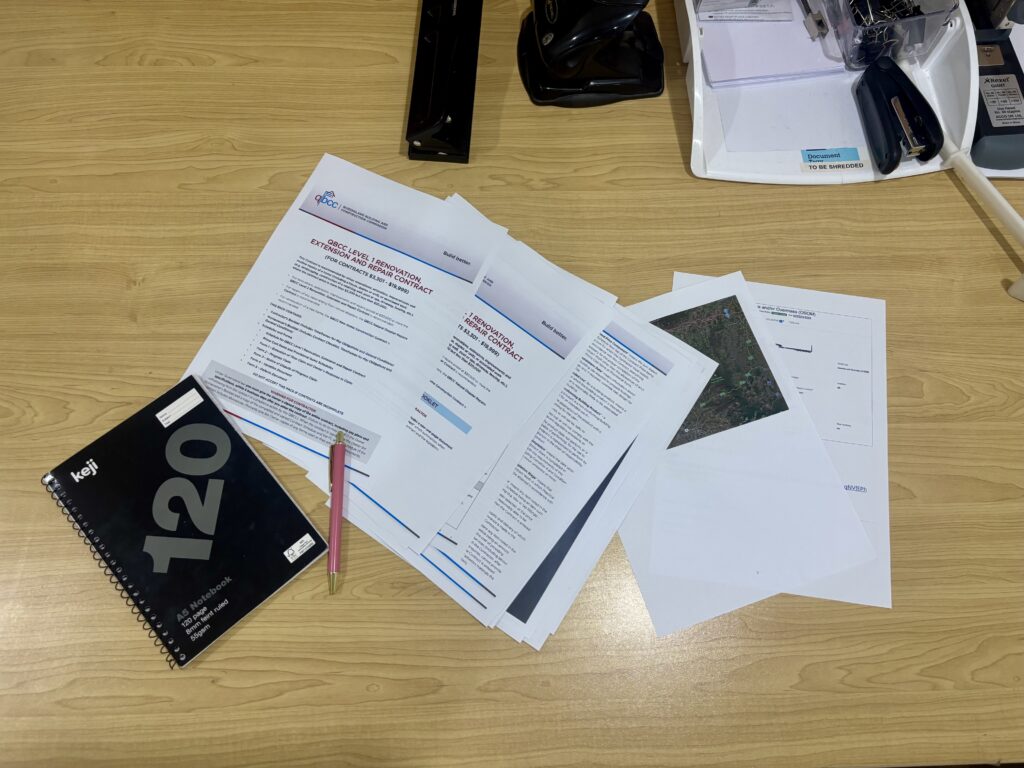
To progress a Building Approval, you’ll generally need:
Timeframes vary by council and site complexity, but here’s what the process typically looks like, based on Mackay & Sons’ own project experience:
| Stage | Typical timeframe |
|---|---|
| Initial Inspection | Usually booked within a week; the inspection itself takes about an hour |
| Offer | Provided within 48 hours of the inspection |
| Contract Stage | Contracts completed within 7 calendar days, if proceeding |
| Certification / Building Approval process | 4 to 6 months, depending on council turnaround and site complexity |
| Road Permits | 4 to 6 weeks to secure |
Overall, from the first inspection through to removal, the process typically takes 6 to 7 months, though in some cases it has been completed in as little as 5 weeks, depending on the project.
For the official process, see Brisbane City Council’s page on relocating a house, and check your own council if you are outside Brisbane.
Demolition Approval (DA) is a separate approval that covers removing a house or structure from a site, it isn’t part of positioning a relocated house on your block. For most customers buying and receiving a relocatable home, DA doesn’t come into the project at all.
It becomes relevant in two situations: if an existing home on your block needs to be demolished to make way for the new one, or if you’re using our Private Relocation service, where Mackay & Sons manages the whole move, both the original address the house is coming from and your destination. Where it applies, a DA is typically issued around 7 days after contracts are signed and carries a fixed fee (see below).
A few costs in the process are generally fixed regardless of project size:
*The QBCC/HBCF premium scales with the insurable value of the work, $757.15 reflects a typical relocatable-house project; your certifier will confirm the exact figure for your job.
We handle our part of the relocation process, inspection, offer and contract, and help you understand what’s coming next. Progressing the actual Building Approval, engaging your certifier, engineer and architect, and managing council applications is a process you run in parallel, with those professionals as the authority on what’s required for your specific property.
Every property is different. Talk to us about your project and we’ll help you understand how the pieces fit together.
Get a free quote → or call 07 3888 9399.
Also check whether your land has suitable access for a relocatable house, or download the complete guide for the full picture.
Yes, always. Every relocatable house being positioned on a property in Queensland requires a Building Approval (BA). There's no exemption based on the size or style of house.
Three key parties are typically involved: your Project BA (a private certifier who assesses and issues the approval), an engineer (who provides structural engineering reports), and an architect (who prepares architectural drawings). Your local council is also involved through applications and, in many cases, a bond.
Generally: site plans, architectural drawings, a structural engineering report, a council application, a plumbing application, and in many cases a council bond.
It varies by council and site complexity. As a general guide, the certification process itself (site plans, architectural drawings, structural engineering, council applications) typically takes 4 to 6 months, and road permits take a further 4 to 6 weeks to secure. From initial inspection through to removal, the overall project is typically 6 to 7 months, though in some cases it has been completed in as little as 5 weeks.
Usually not. Demolition Approval (DA) covers removing a house from a site, not positioning one at its new site, so it doesn't apply to most customers receiving a relocated home. It's only relevant if an existing home on your block needs to be demolished to make way for the new one, or if you're using our Private Relocation service, where we manage both the original site and your destination.
We guide you through our part of the process, from the initial inspection through to the offer and contract, but progressing your Building Approval is a process you run alongside your certifier, engineer, architect and council. It's worth understanding both sides before you commit to a timeline.