How long it takes to move a house depends on the whole project, because the road move is one of the quickest parts. The complete project usually takes a few months because plans, approvals, route preparation and permits all need to be organised before the house can travel.
Get a free quote → or call 07 3888 9399.
The first step is understanding what you are moving, where the house is currently located and where it needs to go.
We assess the house, access to both properties, the proposed route and the likely relocation requirements before confirming the scope of the project.
If you’re still in the early planning stages, our interactive cost calculator can also help give you an indication of some of the costs and factors involved.
Once the project progresses, the plans, engineering and other information required for building approval and relocation can begin to be prepared.
As a general planning guide, this stage may take around 2 to 4 weeks, depending on the property and what information is required.
This is usually where the majority of the project timeline sits.
For a straightforward Queensland relocation, building and council approvals have historically taken around 6 to 8 weeks, although this can vary considerably between councils and individual projects.
Transport planning also needs to be completed before the house can move. Depending on the route and size of the home, road permits and scheduling can take around 4 to 12 weeks.
There may also be other requirements to coordinate, including:
As a general guide, allowing approximately 16 weeks from purchasing the house or committing to the project through to delivery is a useful starting point for a straightforward Queensland relocation.
This is a planning estimate rather than a guaranteed completion date, as every house, route and council is different. Brisbane City Council’s page on relocating a house sets out the approvals involved.
Before transport, the house is prepared for relocation and, where required, separated into sections suitable for transport.
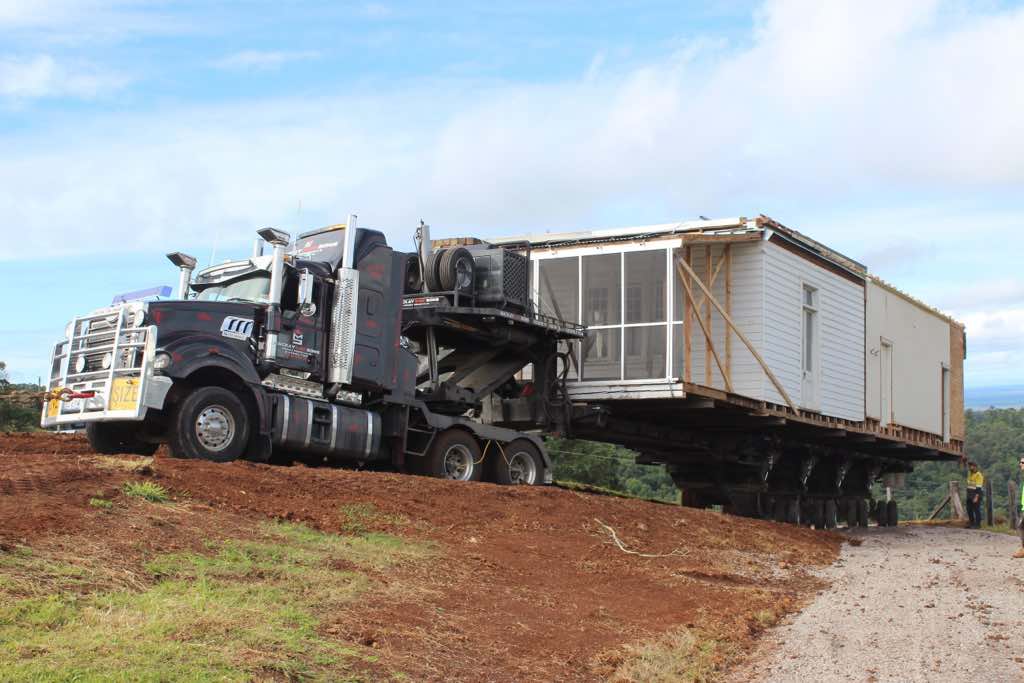
The physical road move itself can happen relatively quickly. House transport commonly takes place at night due to the size of the load and the road conditions attached to the move.
Some homes may reach their destination in a single overnight movement. Larger homes, multi-section houses and long-distance relocations may require multiple movements or take place over several nights.
Once the house reaches the destination, it is positioned on the property and the restumping work included within the relocation scope is completed.
Depending on your project, there may still be other work required after the house has been relocated, such as:
These works are not automatically included as part of the house relocation unless they are specifically listed within your project scope.
When people think about relocating a house, the transport itself often seems like it would be the most time-consuming part.
In reality, a house cannot simply be loaded onto a trailer and driven to its new property.
Before it can travel, the building requirements, plans, engineering, route, road permits and any necessary electricity network or authority approvals need to be organised.
That preparation is why the house itself may travel to its new site overnight, while the complete relocation process can take several months.
If you’re considering relocating a house, having the destination property and proposed home assessed early can help identify the approvals, route requirements and other work that may be involved.
The earlier this information is available, the sooner the planning and approval process can begin.
If the house is beyond saving, see our house demolition cost guide.
Every house, destination, council and transport route is different.
Tell us a little about your project and Mackay & Sons can help give you a realistic idea of the relocation process and what may be involved for your particular move..
Get a free quote → or call 07 3888 9399.
Also want to know what affects the cost or whether your house can be moved? You can also download the complete guide.
Usually the planning and approval stages, not the road move itself. As a general planning guide, plans and engineering can take around 2 to 4 weeks, council approvals around 6 to 8 weeks, and road permit and scheduling requirements another 4 to 12 weeks. Actual timeframes vary by council, route and project.
Road transport commonly takes place overnight, but there isn't one standard duration. Larger homes moving in several sections, long-distance relocations and complex routes may require more preparation or more than one transport movement.
Around 16 weeks is a useful planning guide for a straightforward Queensland relocation where approvals progress normally, but some jobs take longer. Council, engineering, route, electricity network and permit requirements can all affect the program.
Getting the house and destination assessed early and providing the information needed for plans and approvals promptly can help avoid unnecessary delays. Approval and permit processing times themselves are not fully within M&S's control.