How much does it cost to move a house in Brisbane? There is no single price, because the house itself is only one part of the project.. Its size and construction, the distance and transport route, site access, approvals and the work required at the destination can all affect the overall cost.
Get a free quote → or call 07 3888 9399.
A small timber cottage is a very different move from a large Queenslander or a home that needs to be separated into several sections for transport.
The size and layout of the house, how it has been constructed, its condition and the amount of preparation required before it can travel can all affect the cost.
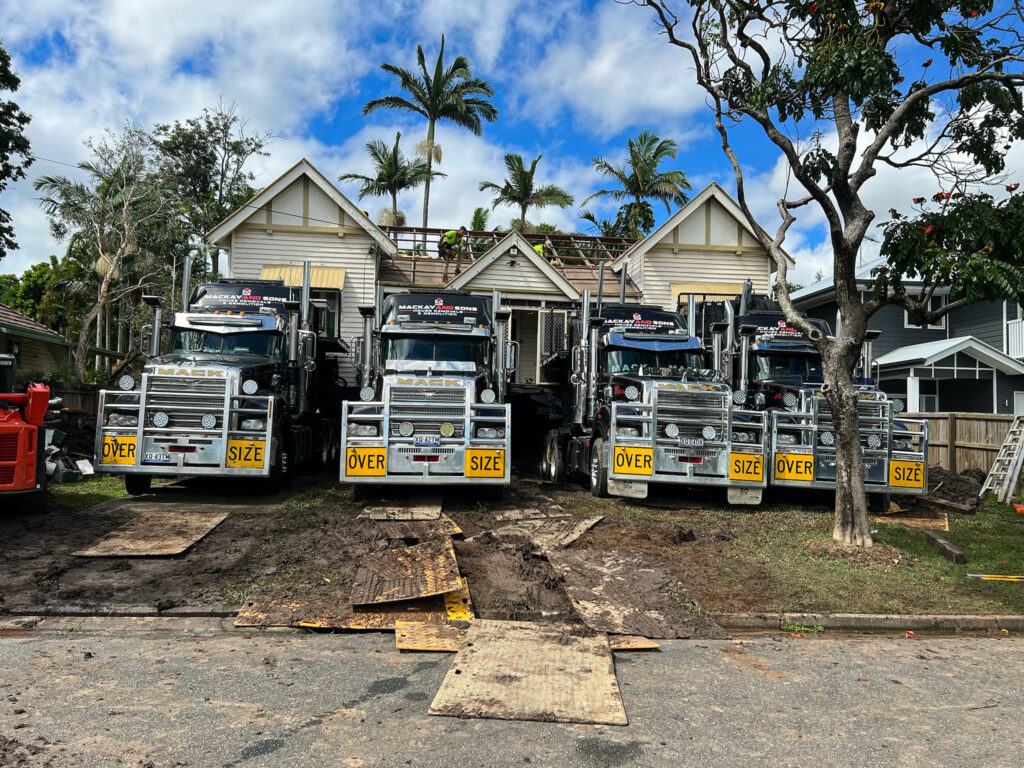
Larger homes do not necessarily mean they cannot be moved, but additional sections generally mean more preparation, transport and reconnection work.
Distance matters, but the number of kilometres between the two properties does not tell the whole story.
Before a house can be moved, the proposed transport route needs to be assessed. This can include:
Two homes travelling a similar distance can therefore have very different transport costs depending on the route and the size of the load.
We also need to consider how the house will get off the existing property and onto the new one.
Good access can make a relocation relatively straightforward, while narrow streets, tight entry points, steep or difficult blocks, neighbouring structures and other site restrictions can require additional planning, equipment or labour.
Sometimes the house itself is perfectly suitable for relocation, but access to or from the property becomes the bigger consideration.
There is more involved in relocating a house than obtaining permission to transport it on the road.
Depending on the property and local council, the project may involve building approval, engineering, architectural plans, certification, council requirements and transport permits.
Other site-specific requirements can also apply, such as council bonds, asbestos requirements, bushfire provisions, wastewater or septic requirements and additional engineering.
These costs vary between properties and councils, which is why they need to be considered as part of the individual project rather than applying one standard allowance to every relocation.
Brisbane City Council’s page on relocating a house.
Once the house reaches its new property, it needs to be positioned and supported on an appropriate foundation.
Mackay & Sons undertakes the restumping of the home as part of our relocation work where included within the project scope.
The cost can vary depending on factors such as:
Your quote will set out the restumping and foundation work included for your particular project.
Relocating the house itself does not mean the home is immediately ready to move into.
Depending on the project, additional works may include:
Some of these works may be included or allowed for within your project estimate, while others may need to be arranged separately. Your written quote and contract will clearly identify what is and is not included.
If the house is beyond saving, see our house demolition cost guide.
Our interactive cost calculator can give you an early indication of some of the costs and factors that may apply to your project.
From there, we look at the actual house, its current location, the destination property, site access, transport route and applicable council requirements so we can provide a much clearer picture of the project.
This is why two houses with a similar purchase price can end up having very different overall relocation costs.
Every project is different, so the written scope of works is important.
Your quote will set out exactly what Mackay & Sons is providing for your particular relocation, including the house transport, restumping and any additional works, fees or allowances included within the project.
There may also be costs outside our scope, such as external trades, service connections, renovations, wastewater or septic works, council requirements and other site-specific works.
Where we are aware of likely additional costs during the quoting stage, we aim to identify these so you can build a more realistic overall project budget rather than considering the house purchase and transport cost alone.
Every house and property is different, which is why the best way to understand the cost is to look at the project as a whole.
Tell us what you’re moving, where it’s coming from and where it’s going, and we’ll help you work out what’s involved.
Get a free quote → or call 07 3888 9399.
Also wondering whether your house can actually be moved or how long the process takes? You can also download the complete guide for the full picture.
There isn't one single factor. The size and construction of the house, how many sections it needs to move in, the route, distance, access at both sites and the restumping or foundation work required can all have a major effect on the final cost.
It depends on the scope of your quote. Mackay & Sons regularly undertakes restumping as part of house relocation work, but electrical, water, sewer and other service disconnections and reconnections are generally arranged and paid for separately by the property owner unless specifically included in the quoted scope.
Larger and more complex homes generally require more planning and preparation. Mackay & Sons specialises in relocating timber and Queenslander-style homes. Brick, masonry and slab-on-ground homes are generally more difficult to relocate and need to be assessed individually.
The interactive cost calculator can give you an early indication. An accurate relocation quote needs to take the actual house, pickup site, destination, access and route requirements into account, so we may need further information or a site inspection before confirming the scope.