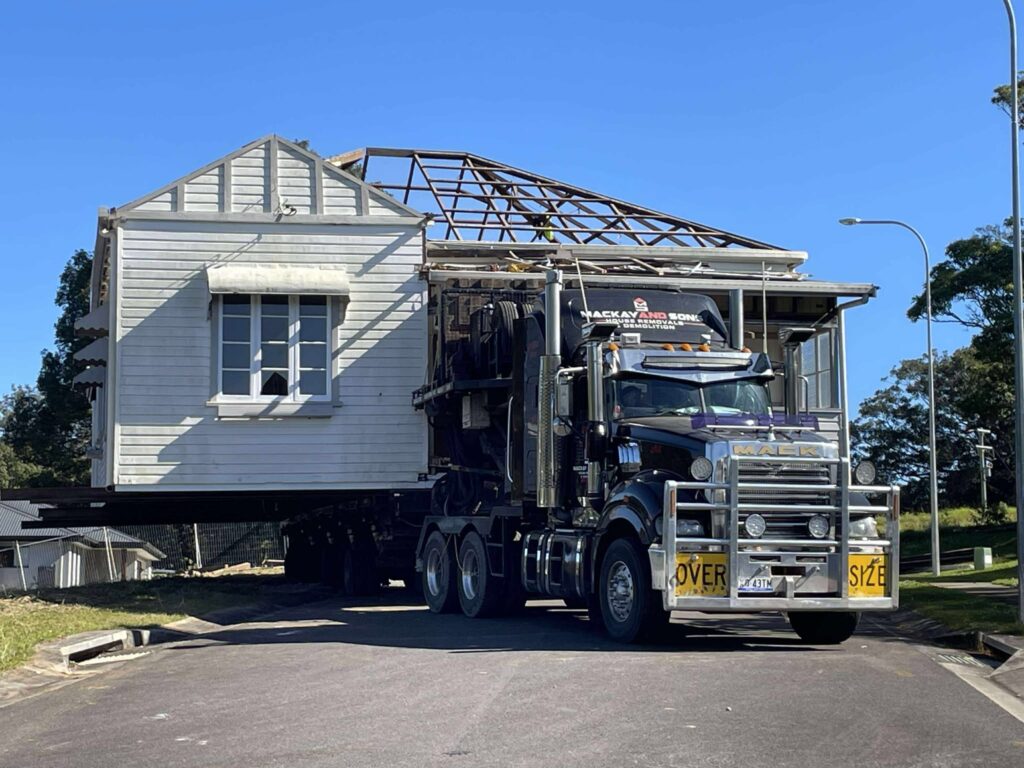
Buying and relocating a home is a big project with a lot of moving parts, land, finance, certification, transport and site works all have to line up. This relocatable home guide walks through buying and relocating a home step by step, from land and finance to certification, transport and site works. Contact us or call 07 3888 9399.
Get a free quote →
Relocatable home guide: the three non-negotiables
Suitable land. Unconditional finance. A realistic whole-project budget. Get these right first and the rest of the process becomes much easier. The relocation journey has four stages:
- Get ready: land, finance and home search
- Commit: contracts and site planning
- Approve: certification and approvals
- Complete: on-site works and occupancy
Before you fall in love with a house, check that your land, council requirements and total budget can support the project. The advertised house price is only one part of the finished cost.
Step 1: Get ready before you shop
Land, finance and due diligence come before the dream home. It’s less glamorous, but it saves expensive surprises later.
- Secure suitable land. Confirm you have a suitable block. Review council requirements for asbestos, bushfire, flood, overlays, access, bonds and any rules that may affect a relocated home.
- Get your finances approved. Finance should be unconditional and cover the full project: house purchase, transport, certification, approvals, site works, service reconnections and finishing works. A secondary dwelling may have extra siting and size rules.
- Complete a preliminary assessment. Some delivery areas need an early assessment by a private certifier before an offer can be accepted. We’ll tell you if this applies to your site.
- Find a suitable home. Browse available homes and use the interactive cost calculator as an early budget guide. House size, number of transport sections, distance, access and stump requirements all affect the final figure.
- Inspect the home in person. Homes may be viewed at our Narangba or Gin Gin locations during arranged business hours. For consignment homes still on-site, we arrange private access. The purchaser must inspect before an EOI can be actioned.
- Submit your EOI. After inspection, submit an Expression of Interest. An EOI registers your offer; the home is secured only after your offer is accepted, contracts are signed and required deposits are paid. Budget checkpoint: use the calculator before making an offer, then allow a contingency for site and approval items that cannot be confirmed until assessment.
Step 2: Contracts & site planning
Once your offer is accepted, the project becomes real. This stage confirms the paperwork, payments, route access and site responsibilities.
- Finalise contracts and pay deposits. We issue formal House Purchase and Transport documents for review and schedule a contract meeting to explain the key terms, allowances and project scope. Once you’re comfortable, the contracts are signed and the required deposits are paid.
- Destination site assessment. After the required House and Transport deposits are paid, a site visit is arranged. We assess destination access and the proposed transport route. You then receive a Site Requirements & Preparation document showing the works and arrangements you must complete before relocation. Your contracts secure the agreed home and transport scope, but they don’t confirm everything. Final site, council, certification and third-party costs may still depend on investigations, engineering, overlays and approval conditions.
- Your handover into certification. After contracts and deposits are complete, your project moves from the Sales team to the Certification and Projects team: you complete the Mackay & Sons Certification Questionnaire, we engage the certifier, engineer and other specialists your site needs, designs and applications are prepared and submitted, and once Building Approval is issued, physical relocation can be programmed. Before the relocation date: complete the access, clearing and site items listed in your Site Requirements document, return forms and requested information quickly so consultants and council can progress, and book service, wastewater and finishing trades early enough to avoid delays after delivery.
Step 3: Certification process
Every site is different. Your council, land, overlays, proposed use and the condition of the home determine which reports and approvals are required.
- Certification handover. You receive the Mackay & Sons Certification Questionnaire. Once returned, we engage the necessary third parties, including the private certifier and engineer, based on your answers.
- Planning & assessments. Architectural and stumping plans are drafted and adjusted for changes such as removed rooms or decks. A soil test informs the footing, engineering and structural design.
- Applications & approvals. If a new wastewater system is needed, a design is arranged and you confirm the preferred system. We then progress the plumbing application, bond process if applicable, and engineering documentation.
- Additional reports. Depending on zoning and overlays, your project may need slope stability, bushfire, building and pest, asbestos clearance or other specialist reports. We confirm what applies to your property.
- Contracts & insurance. When reports and designs are finalised, the plans are internally quoted. Stumping contracts are issued for signing and QBCC insurance is arranged before the project moves forward.
- Final approvals. When documentation and plumbing approvals are complete, any required Material Change of Use is submitted. Brisbane City Council projects may also need a Letter of Foundation Approval. Building Approval marks the end of certification and allows relocation scheduling to begin. Four ways to keep certification moving: reply quickly to Information Requests, make wastewater and design decisions as soon as they’re requested, avoid late layout or deck changes, and track which approvals, site works and payments are due before relocation.
For the official approvals process, see Brisbane City Council’s page on relocating a house.
Step 4: On-site works & final occupancy
Delivery is a major milestone, not the finish line. Your home still needs services, joining, completion works and inspections before it can be occupied.
- Reconnect services. After the home is delivered and stumped, arrange licensed trades to reconnect electricity, plumbing and water. All work must comply with the approval conditions before final inspections.
- Structural join & repairs. Multi-section homes must be structurally rejoined, including rooflines, floors and wall linings. Painting, re-caulking, cornice patching, cabinetry and floor-covering repairs may also be required where the home was split.
- Complete approved renovations. Complete decks, interior updates or layout changes before final inspection. Works must match the approved plans, or your certifier must approve an amendment.
- Framing & final inspections. A framing inspection must be completed and passed. Once all works are finished, the certifier completes the final inspection to confirm compliance with the approved documentation.
- Final occupancy certificate. After the final inspection is passed and all required documents are supplied, the certifier issues the final occupancy certificate confirming the home is compliant and approved for occupation.
- Release the council bond. If a council bond was lodged, submit the final certificate and any required evidence to council to request its release. Your certifier or Mackay & Sons can assist with the final submission. A delivered house is not automatically approved for occupation. Wait until the certifier has completed the required inspections and issued the final occupancy documentation before you move in.
Plan for the whole project
The advertised home price is not the completed-project price. Your budget may also need to cover:
- transport distance and number of sections
- stumps, extra height/depth and tie-downs
- plans, engineering, certification and insurance
- council fees, applications and bonds
- asbestos, roof changes or specialist reports
- access works, pumps, vacuum trucks or tree works
- service reconnections and wastewater
- structural joining, repairs and finishes
- renovations, decks and landscaping
- a sensible contingency for unknowns
Not every house is worth moving. See our house demolition cost guide to compare.
Need a straight answer?
Every property, budget and timeline is different. We’ll help you understand the next step and whether the home, site and budget are realistically compatible. Request a quote → • Call 07 3888 9399 Want the finer detail on cost, feasibility or timing? Read what affects the cost, whether your house can be moved, or how long the process takes. You can also download the complete guide or browse our other resources.